MERCK STOCK OVERVIEW

SNAPSHOT
last updated on 6/28/2026
Ticker | MRK | Sector | Biopharmaceuticals |
52 Week High-Low | $76.66 - $128.78 | Industry | Other Oncology Biopharmaceuticals |
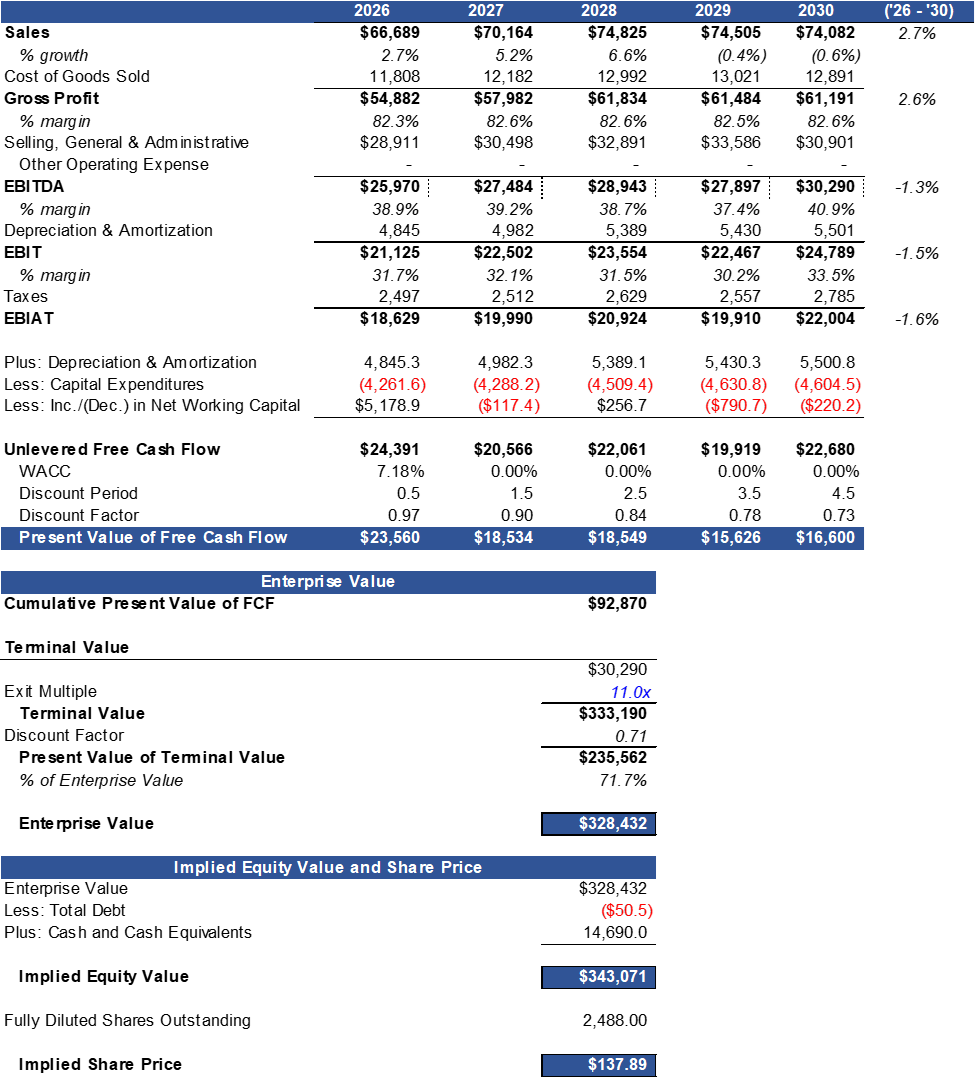
CEO | Robert M. Davis | Target Price | $137.89 |

BUSINESS MODEL
Products Merck & Co., Inc. is a global healthcare company that develops, manufactures, and markets prescription medicines, biologic therapies, vaccines, and animal health products, operating through two primary segments: Pharmaceutical and Animal Health. The pharmaceutical segment includes human health drugs and vaccines targeting oncology, vaccines, hospital acute care, cardiovascular, virology, neuroscience, and diabetes, with flagship products such as Keytruda, Gardasil, and Bridion driving a significant portion of total revenue, while the animal health segment provides veterinary pharmaceuticals, vaccines, and digital monitoring solutions for livestock and companion animals. The company’s model is heavily research-driven, relying on continuous innovation, clinical development, and regulatory approvals to sustain product lifecycles and pricing power, with revenue highly concentrated in a small number of blockbuster drugs, particularly Keytruda, which represents a substantial share of pharmaceutical sales. |
Customer Base Merck serves a diversified but institutionally concentrated customer base consisting primarily of drug wholesalers, hospitals, government agencies, managed care organizations, pharmacy benefit managers, veterinarians, distributors, and animal producers, with end demand driven by patients and healthcare systems globally. Human health products are largely sold through intermediaries such as wholesalers and healthcare providers, while vaccines are distributed to physicians, governments, and public health entities, and animal health products are sold to veterinarians, farmers, and pet owners. This structure creates dependence on large-scale institutional buyers and reimbursement systems, particularly in the U.S. and international markets where government programs and insurance systems play a dominant role in pricing and access. |
Pricing Method Merck’s pricing is heavily influenced by regulatory frameworks, reimbursement structures, and negotiations with large payors, including governments and private insurers, rather than purely market-driven pricing. Prices are shaped by factors such as therapeutic value, clinical outcomes, competitive alternatives, and formulary placement, with significant pressure from managed care organizations, pharmacy benefit managers, and government programs like Medicare and Medicaid. Legislative mechanisms such as the Inflation Reduction Act introduce direct pricing constraints, including drug price negotiations and inflation-based penalties, which increasingly limit pricing flexibility and compress margins over time. |
Supply Chain The company operates a highly complex global supply chain involving research and development, clinical trials, regulatory approval, manufacturing, and distribution across multiple geographies. Raw materials include active pharmaceutical ingredients, biologics, and specialized compounds, with production requiring strict regulatory compliance and quality control. Finished products are distributed through wholesalers, hospitals, and healthcare providers, while the animal health segment utilizes a parallel distribution network serving agricultural and veterinary markets. The supply chain is sensitive to regulatory requirements, manufacturing constraints, and global logistics disruptions, particularly given the specialized nature of pharmaceutical production. |
Sales Channels Merck distributes its products primarily through wholesalers, hospitals, government programs, and healthcare providers, with additional channels including managed care organizations and pharmacy benefit managers that influence patient access and pricing. Vaccines are sold directly to physicians, distributors, and government entities, while animal health products are sold through veterinarians and agricultural distributors. The company’s reliance on institutional channels rather than direct-to-consumer sales creates strong scale advantages but also exposes it to pricing pressure from consolidated buyers and reimbursement systems. |
INDUSTRY ANALYSIS: PORTER'S 5 FORCES
Threat of New Entrants — Low The pharmaceutical industry has extremely high barriers to entry due to the need for extensive R&D investment, clinical trial expertise, regulatory approval processes, and intellectual property protection. Merck’s established portfolio, global scale, and patent-protected drugs create significant protection against new entrants, as developing competing therapies requires billions in capital and years of development, making it difficult for new firms to replicate its position. |
Bargaining Power of Buyers — High Buyers have significant power because they include large, consolidated entities such as governments, managed care organizations, and pharmacy benefit managers that control pricing and access to medications. These entities can negotiate discounts, impose formulary restrictions, and shift demand toward alternative therapies, creating sustained pricing pressure despite the differentiated nature of pharmaceutical products. |
Bargaining Power of Suppliers — Moderate Suppliers provide specialized raw materials, active pharmaceutical ingredients, and manufacturing inputs, and while Merck benefits from scale and diversified sourcing, certain inputs are highly specialized and limited in supply. This creates moderate supplier power, particularly in biologics and complex drug manufacturing where switching costs and regulatory constraints limit flexibility. |
Threat of Substitute - High Substitution risk is high due to the presence of generic drugs, biosimilars, and alternative therapies, especially as patents expire and competitors introduce lower-cost alternatives. In addition, technological innovation and new treatment modalities can rapidly displace existing therapies, forcing continuous reinvestment in R&D to maintain relevance. |
Competitive Rivalry — High Competition is intense among global pharmaceutical companies, smaller biotech firms, and generic manufacturers, with rivalry driven by innovation, clinical outcomes, pricing, and patent protection. The industry is characterized by constant product development, patent challenges, and regulatory competition, leading to significant pressure on maintaining market share and pricing power over time. |
VALUATION: DISCOUNTED CASH FLOW

INVESTMENT RISKS
Systematic Risk |
Market Risk: Merck's market risk is tied to valuation sensitivity and earnings concentration, with the stock trading at a relatively moderate valuation across earnings, EV/EBITDA, and price to sales that still assumes continued growth in key products. Profitability is strong, with high gross margin, operating margin, pretax margin, and net margin in 2025, indicating a highly efficient and profitable business. However, the company's reliance on a small number of blockbuster drugs, particularly in oncology, creates sensitivity to any slowdown in growth, patent expirations, or competitive pressures, which could lead to multiple compression despite strong margins. |
Geopolitical Risk: Merck operates globally and is exposed to geopolitical risks including regulatory differences, trade policies, pricing controls, and healthcare system reforms across multiple jurisdictions. Government-driven pricing mechanisms, particularly in the U.S., EU, and emerging markets, can directly impact revenue and profitability, while international operations expose the company to currency fluctuations, supply chain disruptions, and regional instability. The global nature of pharmaceutical distribution means that geopolitical developments can affect both demand and operational efficiency simultaneously. |
Unsystematic Risk |
Business Risk: Business risk is driven by product concentration, patent cycles, and the need for continuous innovation, as a significant portion of revenue is derived from a limited number of high-performing drugs. While returns remain strong across return on equity and return on invested capital, there is evidence of volatility in operational consistency, including a sharp drop in operating margin in 2023 before recovering strongly in 2025. Free cash flow margin and cash flow conversion have also both declined, indicating less consistent cash generation relative to earnings, which increases execution risk. |
Financial Risk: Merck's financial risk is moderate, supported by strong profitability and returns but influenced by leverage and capital allocation. The company maintains high returns on capital and equity, but a meaningful equity multiplier indicates the use of leverage to enhance returns. Interest burden remains manageable, suggesting that debt is not currently a major constraint, but reliance on leverage still introduces risk if earnings decline or capital markets tighten. |
Liquidity Risk:Liquidity risk is moderate, as the company maintains adequate short-term asset coverage but shows signs of declining efficiency in asset utilization. Cash flow per share and free cash flow per share have both decreased from 2024 to 2025, indicating reduced short-term cash generation capacity. While liquidity remains sufficient, the downward trend in cash flow metrics suggests increasing reliance on continued operational performance to maintain flexibility. |
Regulatory Risk: Regulatory risk is one of the most significant risks for Merck, as the pharmaceutical industry is heavily regulated across all markets, with increasing pressure from governments to reduce drug prices and expand access. Policies such as the Inflation Reduction Act introduce direct price controls and negotiation mechanisms, while international markets impose reference pricing, reimbursement restrictions, and health technology assessments that can limit pricing and market access. Additionally, ongoing legislative changes, compliance requirements, and potential legal challenges create uncertainty around future revenue and profitability, making regulatory risk a persistent and material factor in the company’s long-term outlook. |
MANAGEMENT
Robert M. Davis
Chairman, President & Chief Executive Officer
Robert serves as Chairman, President, and Chief Executive Officer of Merck & Co., Inc. and has been with the company since 2014, previously serving as Chief Financial Officer before assuming the CEO role. He has extensive experience in financial leadership within the healthcare and pharmaceutical industry, including prior roles at Baxter International where he held senior finance and strategy positions. His leadership at Merck has focused on capital allocation, pipeline development, and expanding the company’s oncology and vaccine franchises, particularly around the continued growth of Keytruda. He holds an undergraduate degree from Miami University and an MBA from the Kellogg School of Management at Northwestern University.
__________________________________________________________________________________
Caroline A. Litchfield
Chief Financial Officer & Executive Vice President
Caroline serves as Chief Financial Officer and Executive Vice President at Merck and has been with the company since 1990, holding multiple senior finance roles across global operations. She previously worked in finance leadership roles at companies including Verizon Communications and Immune Design Corp., bringing extensive experience in corporate finance, strategic planning, and capital markets. Her role at Merck includes overseeing financial strategy, reporting, and capital allocation, supporting the company’s investment in research and development and long-term growth initiatives. She holds an undergraduate degree from the University of Leicester.
__________________________________________________________________________________
Dave Williams
Executive Vice President, Chief Information & Digital Officer
Dave serves as Executive Vice President and Chief Information and Digital Officer at Merck, overseeing the company’s digital transformation, data strategy, and information systems. He has prior experience as Chief Information Officer at Merck Animal Health and has held leadership roles focused on technology and innovation, including founding Merck Animal Health Ventures. His work focuses on integrating digital capabilities into research, operations, and commercial functions to enhance efficiency and innovation. He holds an undergraduate degree from the University of Scranton.
__________________________________________________________________________________
Marjorie C. Green, MD
Senior Vice President, Head of Oncology & Global Clinical Development
Marjorie serves as Senior Vice President and Head of Oncology and Global Clinical Development at Merck, leading clinical strategy and development for oncology programs. She has experience in clinical research and pharmaceutical development, including roles at NeoGenomics, and brings deep expertise in oncology therapeutics. Her work is central to advancing Merck’s oncology pipeline and sustaining the growth of key products such as Keytruda. She holds undergraduate and medical degrees from the University of Notre Dame and the University of Texas Medical Branch.
__________________________________________________________________________________
Jannie Oosthuizen
Executive Vice President, President – Oncology & MSD International
Jannie serves as Executive Vice President and President of Oncology and MSD International at Merck, overseeing global oncology strategy and international markets. He has held multiple leadership roles within the company, including President of Merck Human Health U.S., and has extensive experience in global pharmaceutical operations and commercial strategy. His responsibilities include driving international growth and expanding access to Merck’s oncology portfolio across global markets.
__________________________________________________________________________________
Find Merck's 10 Year Financial Statements below.


