AMD STOCK OVERVIEW
- Feb 25
- 6 min read
Updated: Jun 5
SNAPSHOT
Ticker | AMD | Sector | Electronic Components |
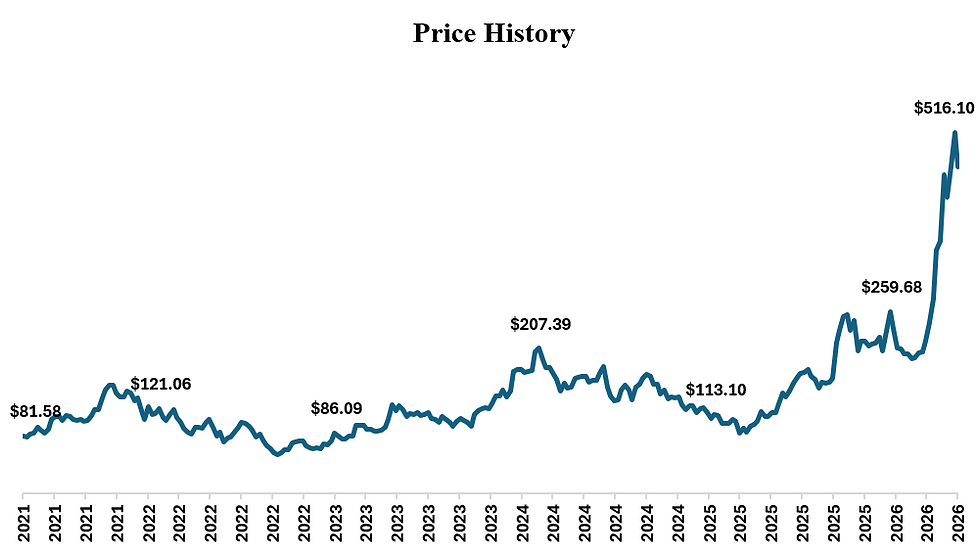
52 Week High-Low | $114.71 - $546.44 | Industry | Multimedia Semiconductors |
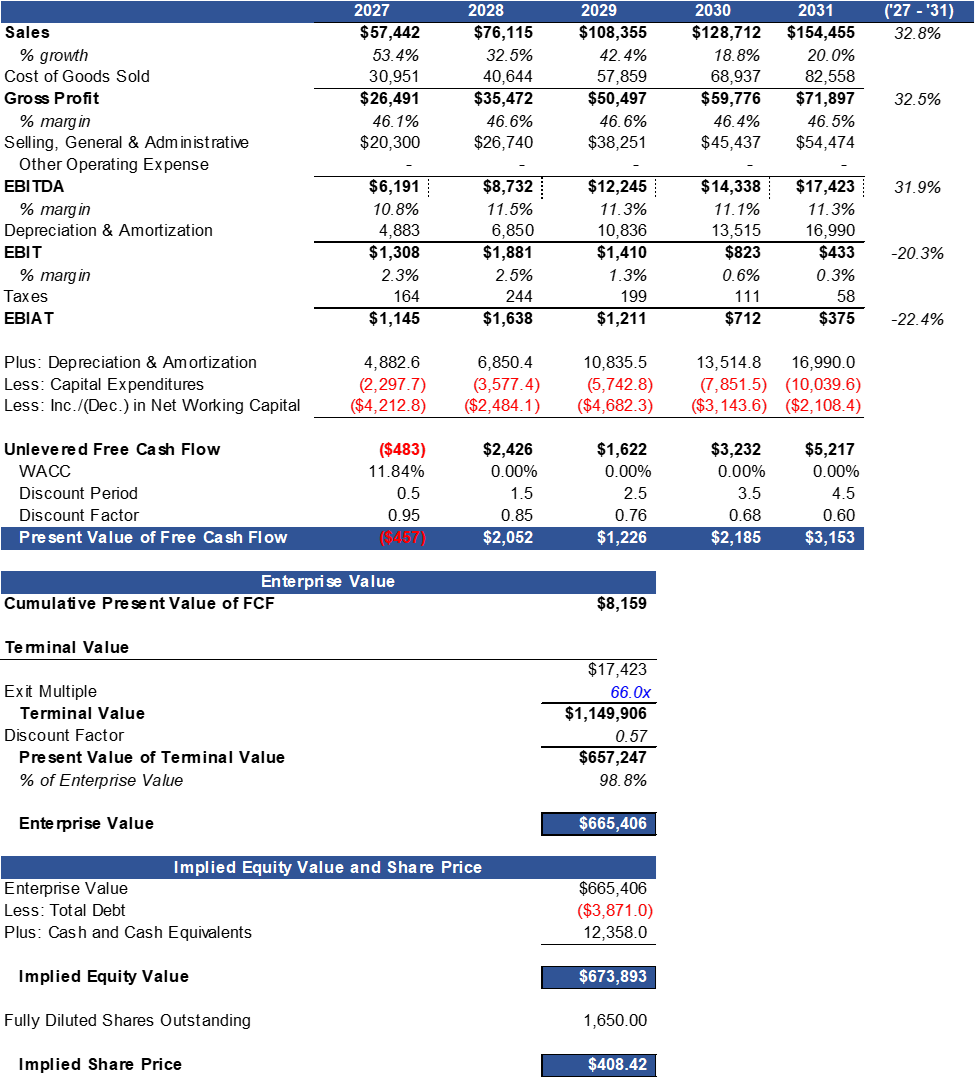
CEO | Lisa T. Su, PhD | Target Price | $408.42 |
BUSINESS MODEL
Products AMD designs and sells high-performance semiconductor products. Its core offerings include central processing units (CPUs) for desktops, laptops, and servers; graphics processing units (GPUs) for gaming, professional visualization, and data centers; adaptive computing solutions such as FPGAs and embedded processors; and AI accelerators for data center workloads. The company also develops related software stacks and platform technologies that optimize performance across computing, gaming, and artificial intelligence applications. |
Customer Base AMD serves a diversified global customer base that includes large cloud service providers, enterprise data center operators, OEMs such as PC and server manufacturers, gaming console producers, and add-in board partners. Key hyperscale customers purchase data center CPUs and GPUs for cloud infrastructure and AI workloads. Consumer-facing segments include gamers, PC users, and embedded system customers in industrial, automotive, and telecommunications markets. |
Pricing Method Pricing varies by product segment and performance tier. Data center processors and AI accelerators are typically sold at premium price points based on performance-per-watt, compute capability, and competitive positioning. Consumer CPUs and GPUs are priced across multiple tiers to address entry-level through high-end markets. Sales are generally conducted through OEM contracts, distribution agreements, or long-term supply arrangements, with payment terms negotiated based on volume commitments and strategic relationships. |
Supply Chain AMD operates a fabless model, outsourcing semiconductor manufacturing primarily to third-party foundries and assembly/test providers. It relies heavily on advanced process nodes from key manufacturing partners, as well as suppliers of substrates, wafers, and packaging technologies. Strategic relationships with fabrication partners, IP licensors, and ecosystem software developers are critical to delivering competitive products and maintaining technological leadership. |
Sales Channels Products are sold through a combination of direct sales to hyperscalers and large OEMs, as well as through distributors, system integrators, and retail channels. Data center solutions are delivered via enterprise and cloud infrastructure contracts, while consumer CPUs and GPUs reach end users through PC manufacturers and global retailers. AMD also collaborates with console manufacturers under long-term supply agreements for semi-custom chips. |
INDUSTRY ANALYSIS: PORTER'S 5 FORCES
Threat of New Entrants — Low The semiconductor industry is characterized by extremely high capital intensity, advanced technical barriers, and long product development cycles. Designing competitive CPUs, GPUs, and AI accelerators requires deep engineering expertise, proprietary architectures, and access to leading-edge fabrication processes. Economies of scale, strong intellectual property portfolios, and entrenched relationships with OEMs and hyperscale customers further limit the ability of new entrants to compete effectively at AMD’s scale. |
Bargaining Power of Buyers — Moderate to High Large customers such as cloud providers, enterprise server OEMs, and major PC manufacturers purchase in high volumes and can negotiate pricing, supply commitments, and technical customization. Hyperscalers in particular have significant leverage due to their purchasing scale and ability to diversify suppliers. However, performance differentiation, ecosystem compatibility, and long qualification cycles reduce switching frequency, partially offsetting buyer power. |
Bargaining Power of Suppliers — High AMD operates under a fabless model and depends heavily on a limited number of advanced semiconductor foundries for manufacturing. Access to cutting-edge process nodes and packaging technologies is concentrated among a few suppliers, increasing supplier leverage. Shortages in wafers, substrates, or advanced packaging capacity can constrain output and affect margins. While long-term agreements and scale provide some negotiating power, supplier concentration remains a structural risk. |
Threat of Substitutes - Moderate Substitutes include competing architectures such as ARM-based processors, custom silicon developed by hyperscalers, and alternative AI accelerators from integrated competitors. In some segments, integrated system-on-chip designs or proprietary accelerators can replace general-purpose CPUs and GPUs. However, AMD’s broad product portfolio, compatibility with existing software ecosystems, and performance improvements reduce the immediate threat of substitution in many core markets. |
Competitive Rivalry — High AMD competes in highly contested markets including data center CPUs, AI accelerators, and consumer GPUs. Rivalry is driven by rapid technological innovation, product performance benchmarks, pricing competition, and ecosystem integration. Major competitors possess substantial financial resources, manufacturing scale, and established market share. Product cycles are frequent, and leadership can shift quickly based on performance gains, making competitive intensity persistently high. |
VALUATION: DISCOUNTED CASH FLOW

INVESTMENT RISKS
Systematic Risk |
Market Risk: AMD exhibits high sensitivity to overall equity market conditions due to its cyclical revenue exposure and concentration in growth-oriented segments such as data centers, gaming, and AI accelerators. Semiconductor demand is closely tied to enterprise IT spending, cloud infrastructure investment, and consumer discretionary cycles. In periods of macroeconomic slowdown, capital expenditure reductions by hyperscalers or weaker PC demand can materially affect revenue growth. As a technology growth stock, valuation multiples may also compress during rising interest rate environments or broad market corrections. |
Geopolitical Risk: AMD operates within a globally integrated semiconductor supply chain. It relies on advanced fabrication partners and global component suppliers, many of which are concentrated in Asia. Trade tensions, export controls on advanced AI chips, tariffs, or restrictions involving the United States and China could limit market access or increase compliance costs. Additionally, geopolitical instability affecting Taiwan or other key manufacturing regions could disrupt production capacity and materially impact supply continuity. |
Unsystematic Risk |
Business Risk: AMD faces substantial competitive pressure in CPUs, GPUs, and AI accelerators. Rapid product innovation cycles require sustained R&D investment, and any delay in product launches or performance shortfall versus competitors could result in market share erosion. Revenue concentration among hyperscale customers also introduces dependency risk. Semiconductor demand volatility, pricing pressure, and inventory corrections across PC and gaming markets further amplify earnings variability. |
Financial Risk: The company’s financial risk profile is moderate. While leverage ratios in recent years have generally remained manageable relative to EBITDA, earnings volatility inherent to the semiconductor cycle can cause fluctuations in coverage metrics. In downturns, reduced EBITDA may pressure debt/EBITDA and interest coverage ratios. Capital allocation decisions, including acquisitions or expanded AI infrastructure investments, could also increase balance sheet leverage if funded through debt. |
Liquidity Risk: Liquidity risk appears low to moderate, supported by cash reserves and operating cash flow generation. Strong gross margins in data center and AI segments contribute to internal funding capacity. However, semiconductor capital requirements, inventory build cycles, and working capital needs can create short-term cash flow variability. Sustained industry downturns could temporarily reduce free cash flow, but overall liquidity metrics indicate the firm maintains sufficient coverage of short-term obligations. |
Regulatory Risk: AMD operates in a highly regulated industry subject to export controls, intellectual property laws, and semiconductor-specific trade policies. U.S. restrictions on advanced AI chip exports to certain countries may limit revenue opportunities or require product redesigns. Antitrust scrutiny in major markets, data security compliance requirements, and environmental regulations related to semiconductor manufacturing and supply chain partners may also increase operational costs. Changes in global trade or technology policies could materially affect market access and competitive positioning. |
MANAGEMENT
Lisa T. Su, PhD
Chairman, President & Chief Executive Officer
Lisa has been with Advanced Micro Devices since 2012 and assumed the top leadership role in 2022. She previously led global business units at IBM, including Semiconductor Research & Development, and held senior engineering and management roles at Texas Instruments and Freescale Semiconductor. In addition to her corporate leadership, she serves on the boards of Cisco and the Semiconductor Industry Association. She holds a doctorate in electrical engineering from MIT.
__________________________________________________________________________________
Keivan Keshvari, MBA
Senior Vice President – Global Operations & Quality
Keivan led global operations and quality functions since 2018, overseeing manufacturing coordination, supply chain execution, and external foundry relationships. He previously served in senior supply chain and manufacturing roles at NXP Semiconductors and brings extensive experience in semiconductor operations management. He holds an undergraduate degree from Texas State University and an MBA from St. Edward’s University.
__________________________________________________________________________________
Hasmukh Ranjan, MBA
Chief Information Officer & Senior Vice President
Hasmukh joined Advanced Micro Devices in 2022 and leads global information technology strategy and digital transformation initiatives. Prior to joining the company, he served in senior IT leadership roles at Synopsys and Xilinx, where he oversaw enterprise systems, infrastructure modernization, and business process optimization. He holds an undergraduate degree from Birla Institute of Technology & Science and a master’s degree from Northeastern University.
__________________________________________________________________________________
Vamsi Boppana
Senior Vice President – Artificial Intelligence
Vamsi has led artificial intelligence initiatives since 2023, driving development of AI-focused products and platform strategy. He previously held senior product and engineering leadership roles at Xilinx and founded Zenasis Technologies, where he served as Vice President of Engineering. He earned undergraduate and graduate degrees from the Indian Institute of Technology Kharagpur and a doctorate from the University of Illinois.
__________________________________________________________________________________
Mark D. Papermaster
Chief Technology Officer & Executive Vice President
Mark has been with Advanced Micro Devices since 2011 and assumed the technology leadership role in 2019. He previously led silicon engineering initiatives at Cisco Systems and held senior hardware engineering roles at Apple. He also serves on the board of the Global Semiconductor Alliance and is involved with academic and research advisory groups, including the University of Texas and the University of Arizona. He holds an undergraduate degree from the University of Texas at Austin and a graduate degree from the University of Vermont.
__________________________________________________________________________________
Philip J. Guido
Chief Commercial Officer & Executive Vice President
Phillip Joined Advanced Micro Devices in 2023 and oversees global commercial strategy and enterprise sales initiatives. Prior to joining the company, he was a senior advisor at Brighton Park Capital Management and previously served in leadership roles at IBM, including General Manager of Global Managing Partner–Strategic Sales. He completed his undergraduate studies at Montclair State University.
__________________________________________________________________________________
Find AMD's 10 Year Financial Statements below.


